" height="29px" id="bXox46a9X" width="107.99999713627835px"/></svg>)
Hundreds of Flows.
No Source of Truth.
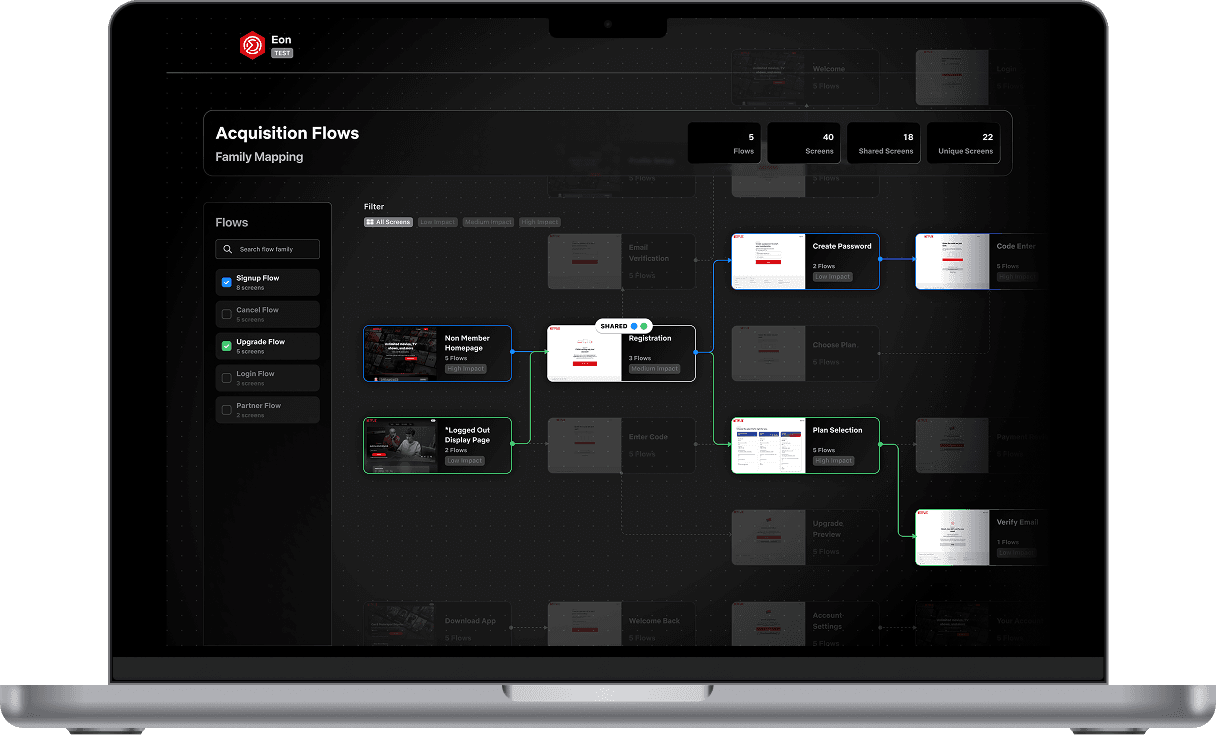
So many flows and before Eon, nobody could experience them like a customer would. I was the sole designer on Eon, an internal 0→1 tool, from early concept through a near-launch MVP.
Hundreds of Flows.
No Source of Truth.
So many flows and before Eon, nobody could experience them like a customer would. I was the sole designer on Eon, an internal 0→1 tool, from early concept through a near-launch MVP.
Hundreds of Flows.
No Source of Truth.
So many flows and before Eon, nobody could experience them like a customer would. I was the sole designer on Eon, an internal 0→1 tool, from early concept through a near-launch MVP.
Hundreds of Flows.
No Source of Truth.
So many flows and before Eon, nobody could experience them like a customer would. I was the sole designer on Eon, an internal 0→1 tool, from early concept through a near-launch MVP.
THE STAKES
Life without knowing flows
Identifying customer flows (like sign-up) seems straightforward. First, there's a landing page with a CTA, enter your info, payment, hit confirm, then boom, you're a member. But what if you make an error? What if you're a returning member? What if you're in the EU where there are different payment requirements? What if you're coming from a partner site? It's just too much to track in a Figma file.
56k+
possible screen variants (countries, languages, platforms, etc)
3 days
on average just to answer "what does this flow look like?"
Why it matters...
Legal couldn't quickly verify a customer or government inquiry
Design couldn't start a project without auditing what existed and which A/B tests are active
Localization couldn't translate without auditing copy or layout for longer text
PM couldn't scope a project's blast radius
THE STAKES
Life without knowing flows
Identifying customer flows (like sign-up) seems straightforward. First, there's a landing page with a CTA, enter your info, payment, hit confirm, then boom, you're a member. But what if you make an error? What if you're a returning member? What if you're in the EU where there are different payment requirements? What if you're coming from a partner site? It's just too much to track in a Figma file.
56k+
possible screen variants (countries, languages, platforms, etc)
3 days
on average just to answer "what does this flow look like?"
Why it matters...
Legal couldn't quickly verify a customer or government inquiry
Design couldn't start a project without auditing what existed and which A/B tests are active
Localization couldn't translate without auditing copy or layout for longer text
PM couldn't scope a project's blast radius
THE STAKES
Life without knowing flows
Identifying customer flows (like sign-up) seems straightforward. First, there's a landing page with a CTA, enter your info, payment, hit confirm, then boom, you're a member. But what if you make an error? What if you're a returning member? What if you're in the EU where there are different payment requirements? What if you're coming from a partner site? It's just too much to track in a Figma file.
56k+
possible screen variants (countries, languages, platforms, etc)
3 days
on average just to answer "what does this flow look like?"
Why it matters...
Legal couldn't quickly verify a customer or government inquiry
Design couldn't start a project without auditing what existed and which A/B tests are active
Localization couldn't translate without auditing copy or layout for longer text
PM couldn't scope a project's blast radius
THE STAKES
Life without knowing flows
Identifying customer flows (like sign-up) seems straightforward. First, there's a landing page with a CTA, enter your info, payment, hit confirm, then boom, you're a member. But what if you make an error? What if you're a returning member? What if you're in the EU where there are different payment requirements? What if you're coming from a partner site? It's just too much to track in a Figma file.
56k+
possible screen variants (countries, languages, platforms, etc)
3 days
on average just to answer "what does this flow look like?"
Why it matters...
Legal couldn't quickly verify a customer or government inquiry
Design couldn't start a project without auditing what existed and which A/B tests are active
Localization couldn't translate without auditing copy or layout for longer text
PM couldn't scope a project's blast radius

DISCOVERY
Gathering Assumptions
I ran a FigJam workshop with the team, using prompts to draw out their assumptions about the problem, the users, their behaviors, and their needs. Then I turned each assumption into research questions I could validate with real people.
UNCOVERING CONFLICT
User Flows Are Seen Differently

To a designer
A flow is the path you intend: a linear sequence from entry point to success state. Clear start, clear end, clear purpose. The happy path.

To an engineer
A flow is a graph traversal. Nodes connected by conditional logic, no fixed start or end. The path depends entirely on the user's state.
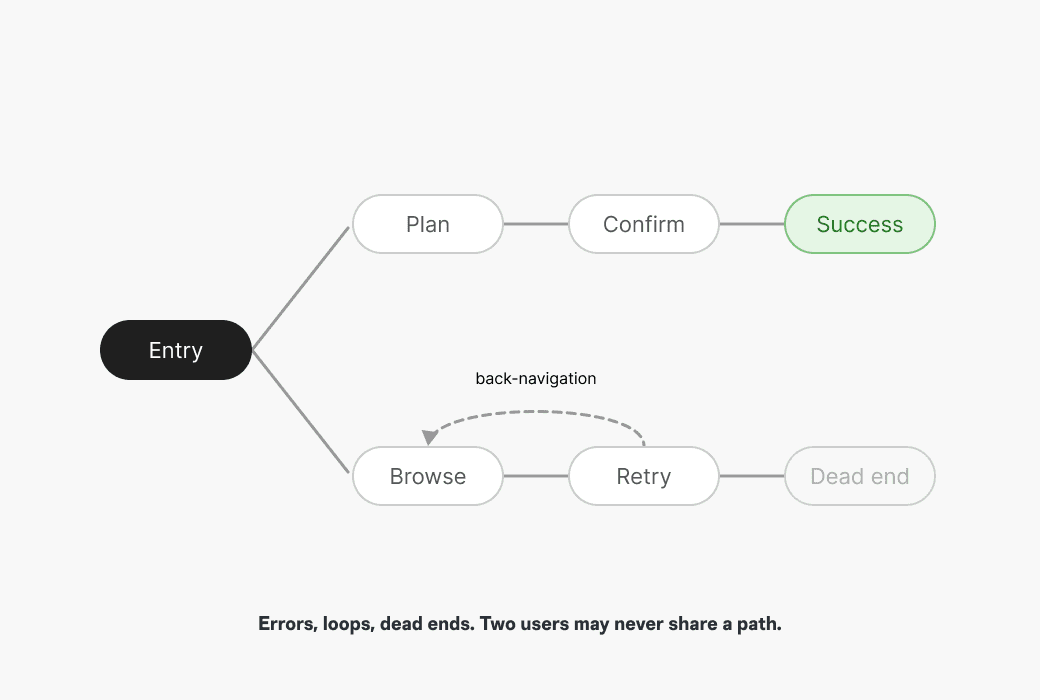
To a customer
A flow is whatever actually happened: errors, back-navigation, dead ends. Two users starting from the same screen may never share a path.
UNCOVERING CONFLICT
User Flows Are Seen Differently
To a designer
A flow is the path you intend: a linear sequence from entry point to success state. Clear start, clear end, clear purpose. The happy path.
To an engineer
A flow is a graph traversal. Nodes connected by conditional logic, no fixed start or end. The path depends entirely on the user's state.
To a customer
A flow is whatever actually happened: errors, back-navigation, dead ends. Two users starting from the same screen may never share a path.
UNCOVERING CONFLICT
User Flows Are Seen Differently
To a designer
A flow is the path you intend: a linear sequence from entry point to success state. Clear start, clear end, clear purpose. The happy path.
To an engineer
A flow is a graph traversal. Nodes connected by conditional logic, no fixed start or end. The path depends entirely on the user's state.
To a customer
A flow is whatever actually happened: errors, back-navigation, dead ends. Two users starting from the same screen may never share a path.
UNCOVERING CONFLICT
User Flows Are Seen Differently
To a designer
A flow is the path you intend: a linear sequence from entry point to success state. Clear start, clear end, clear purpose. The happy path.
To an engineer
A flow is a graph traversal. Nodes connected by conditional logic, no fixed start or end. The path depends entirely on the user's state.
To a customer
A flow is whatever actually happened: errors, back-navigation, dead ends. Two users starting from the same screen may never share a path.
Shaping strategy
Validating Real User Needs
User Interviews
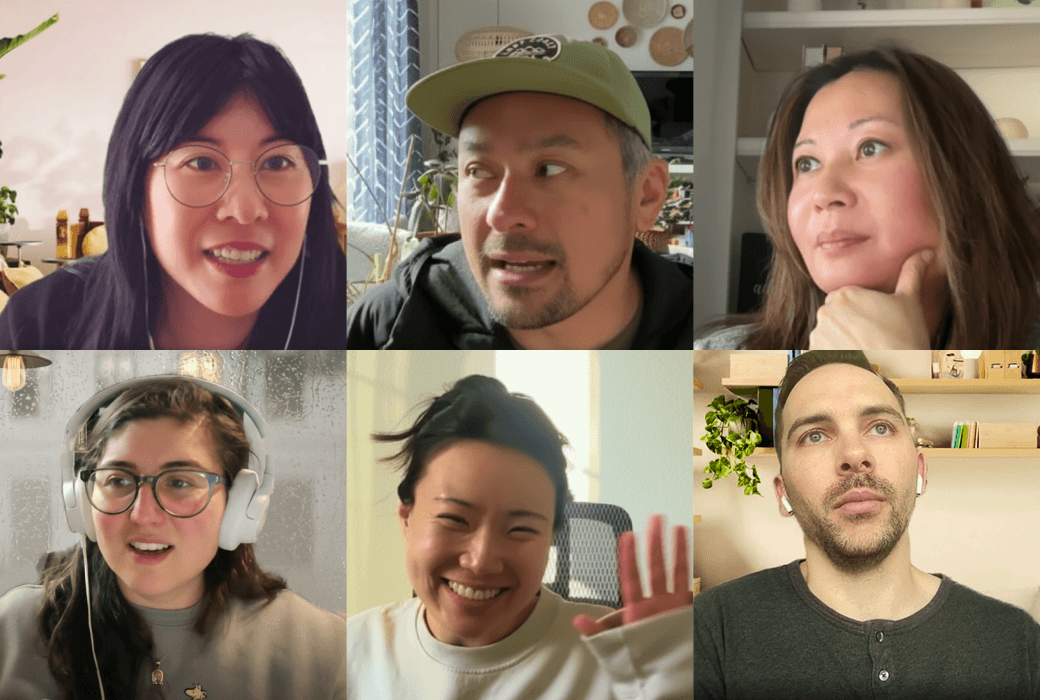
It all starts with the users. I ran generative interviews with 20+ stakeholders across five teams, which gave me validated evidence to shape what the product should and shouldn’t be.
Identifying Gaps
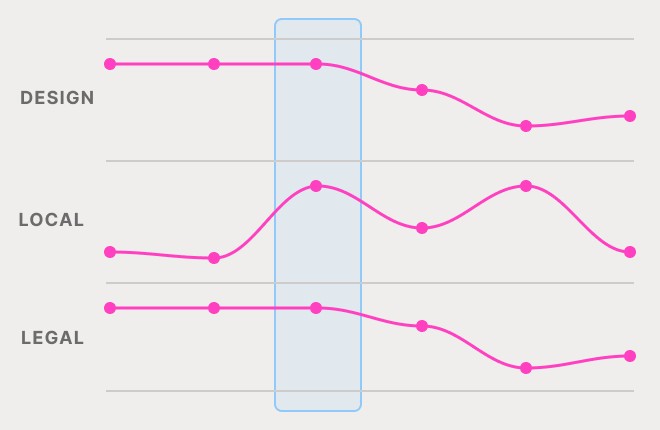
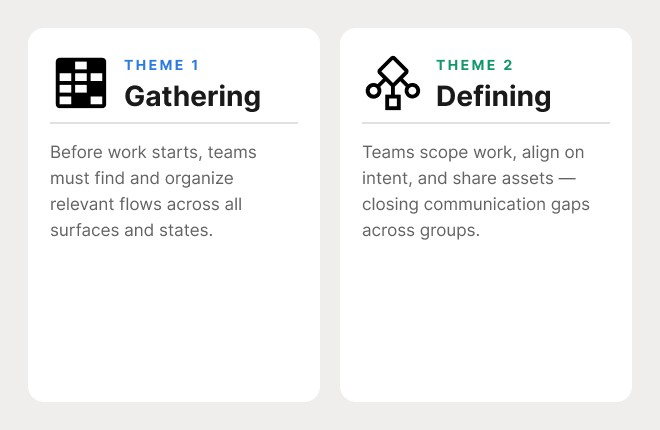
I mapped each team’s workflow end to end, then looked for the signal: pain points that appeared across every group. Those shared gaps became the strategic filter for every design decision.
Strategic Alignment
I turned those insights into a product strategy doc that scoped the MVP and got all stakeholders aligned. I was able to replace assumptions about user needs with validated evidence.
Shaping strategy
Validating Real User Needs
User Interviews
It all starts with the users. I ran generative interviews with 20+ stakeholders across five teams, which gave me validated evidence to shape what the product should and shouldn’t be.
Identifying Gaps
I mapped each team’s workflow end to end, then looked for the signal: pain points that appeared across every group. Those shared gaps became the strategic filter for every design decision.
Strategic Alignment
I turned those insights into a product strategy doc that scoped the MVP and got all stakeholders aligned. I was able to replace assumptions about user needs with validated evidence.
Shaping strategy
Validating Real User Needs
User Interviews
It all starts with the users. I ran generative interviews with 20+ stakeholders across five teams, which gave me validated evidence to shape what the product should and shouldn’t be.
Identifying Gaps
I mapped each team’s workflow end to end, then looked for the signal: pain points that appeared across every group. Those shared gaps became the strategic filter for every design decision.
Strategic Alignment
I turned those insights into a product strategy doc that scoped the MVP and got all stakeholders aligned. I was able to replace assumptions about user needs with validated evidence.
Shaping strategy
Validating Real User Needs
User Interviews
It all starts with the users. I ran generative interviews with 20+ stakeholders across five teams, which gave me validated evidence to shape what the product should and shouldn’t be.
Identifying Gaps
I mapped each team’s workflow end to end, then looked for the signal: pain points that appeared across every group. Those shared gaps became the strategic filter for every design decision.
Strategic Alignment
I turned those insights into a product strategy doc that scoped the MVP and got all stakeholders aligned. I was able to replace assumptions about user needs with validated evidence.
DESIGN
From Definition to Design
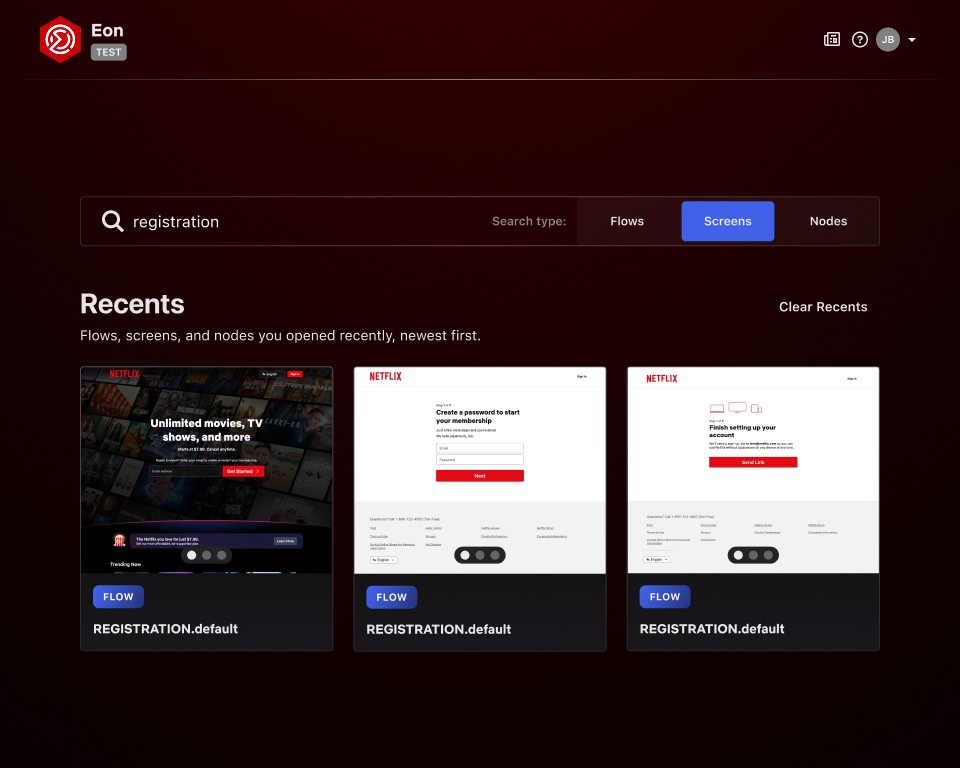
The product centered on three searchable entities: flows, screens, nodes, and how they relate to each other. For example, "in what flows does the payment screen show up in?" And if that screen changed, how many flows would it affect? The product would make sure those important questions were answered.

Prototyping
Finding your flow
So… what exactly does the customer see when they are signing up, in the EU, and they are a former member (2 year lapse and email still on file)? Are there any active A/B tests in this space? This is exactly what the delivered product would provide. Not just logs and node IDs, but a visual representation of the journey.
Prototyping
Finding your flow
So… what exactly does the customer see when they are signing up, in the EU, and they are a former member (2 year lapse and email still on file)? Are there any active A/B tests in this space? This is exactly what the delivered product would provide. Not just logs and node IDs, but a visual representation of the journey.
Prototyping
Finding your flow
So… what exactly does the customer see when they are signing up, in the EU, and they are a former member (2 year lapse and email still on file)? Are there any active A/B tests in this space? This is exactly what the delivered product would provide. Not just logs and node IDs, but a visual representation of the journey.
Prototyping
Finding your flow
So… what exactly does the customer see when they are signing up, in the EU, and they are a former member (2 year lapse and email still on file)? Are there any active A/B tests in this space? This is exactly what the delivered product would provide. Not just logs and node IDs, but a visual representation of the journey.
AI powered validation
Using Claude Code, in my own dev-environment, I designed in the codebase, tied to the back-end. Which means I could test my designs with real users with real data, iterate quickly, and make pull requests--virtually killing sprint cycles.
Always Validating
Task-based sessions with designers and PMs from the Netflix Growth org. Users kept reaching for the read-only metadata: changing values, waiting for flows to update. No label fixes a false affordance. The IA had to change.
Always validating
Task-based sessions with designers and PMs from the Netflix Growth org. Users kept reaching for the read-only metadata: changing values, waiting for flows to update. No label fixes a false affordance. The IA had to change.
Always Validating
Task-based sessions with designers and PMs from the Netflix Growth org. Users kept reaching for the read-only metadata: changing values, waiting for flows to update. No label fixes a false affordance. The IA had to change.
Future State
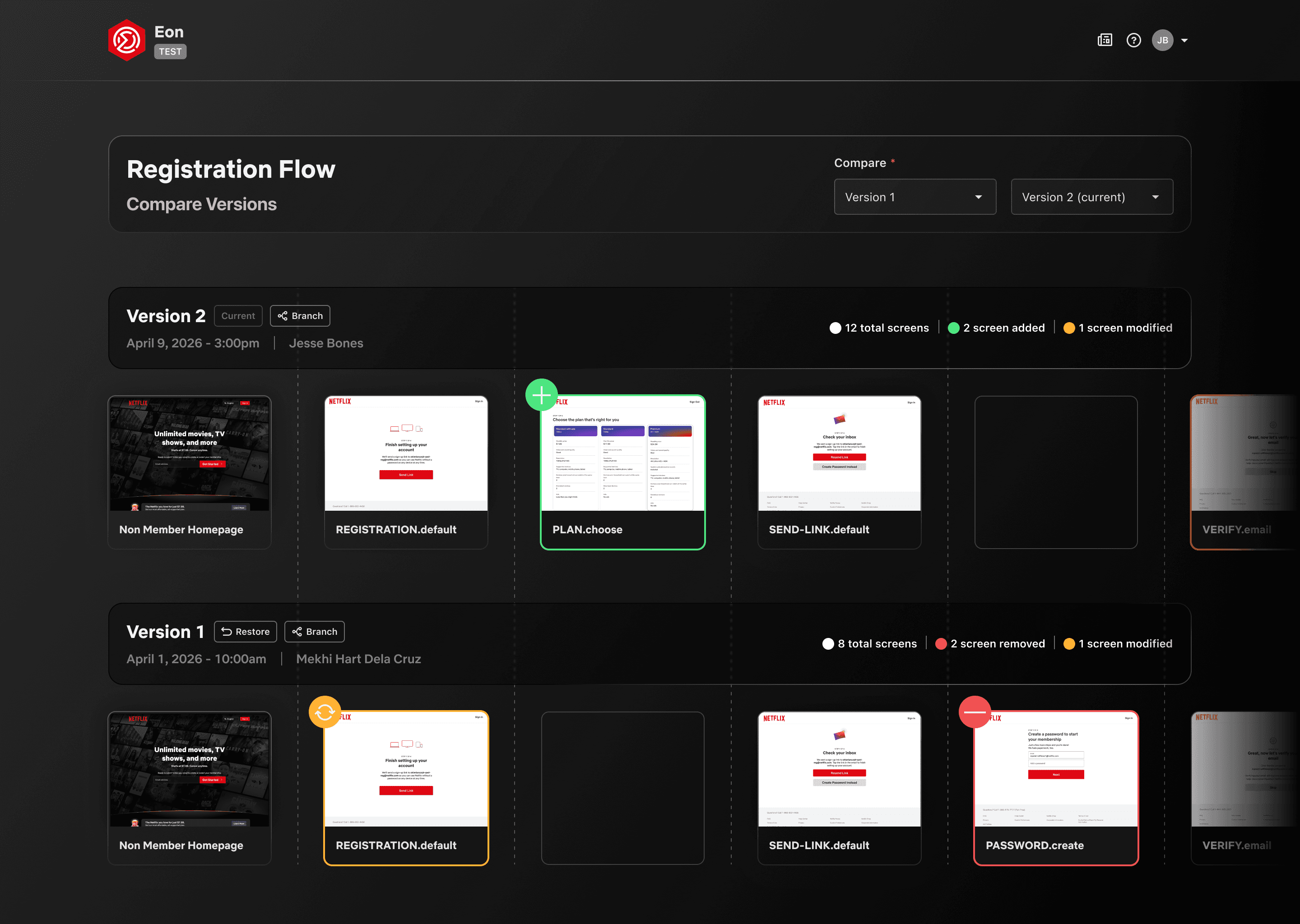
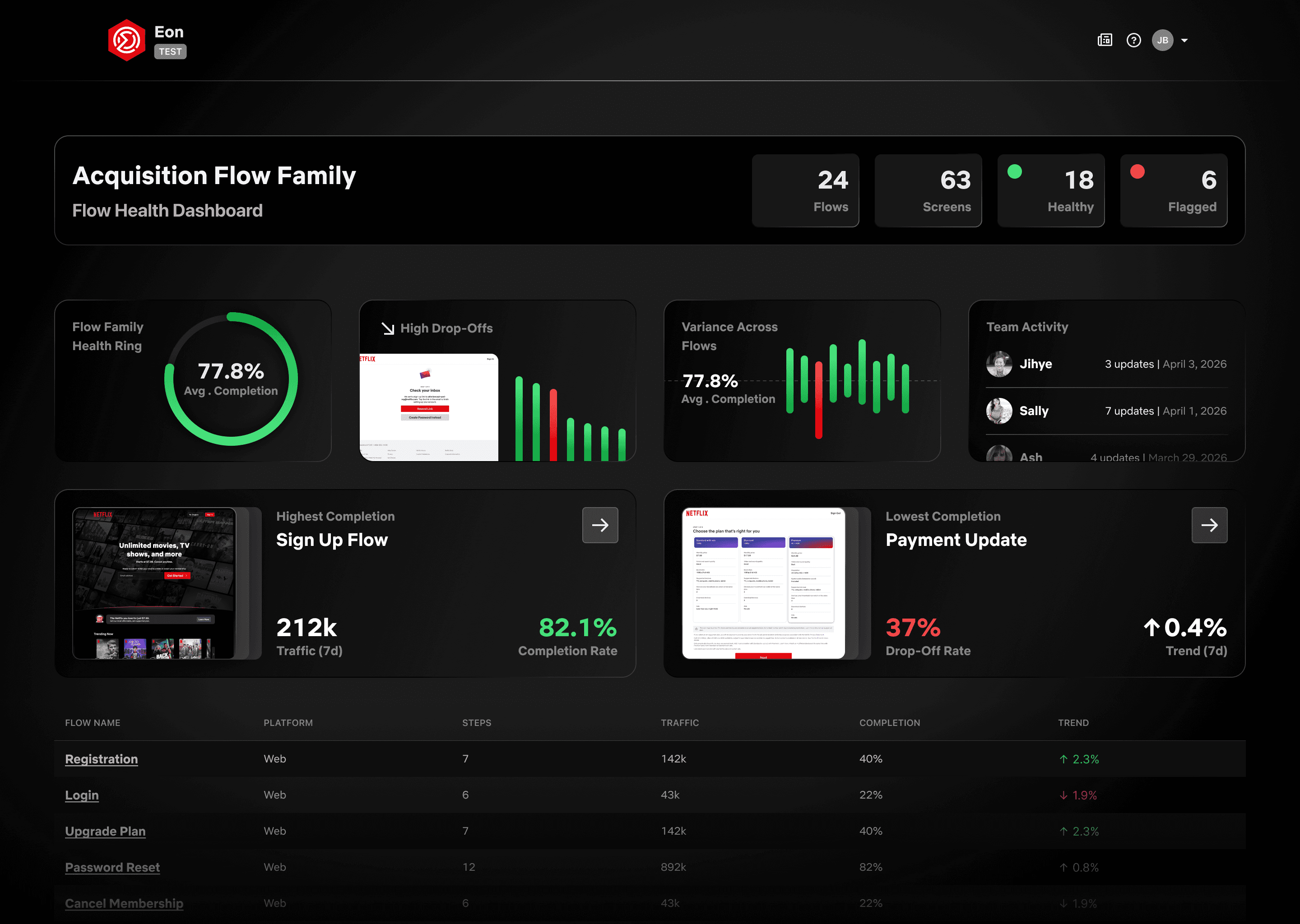
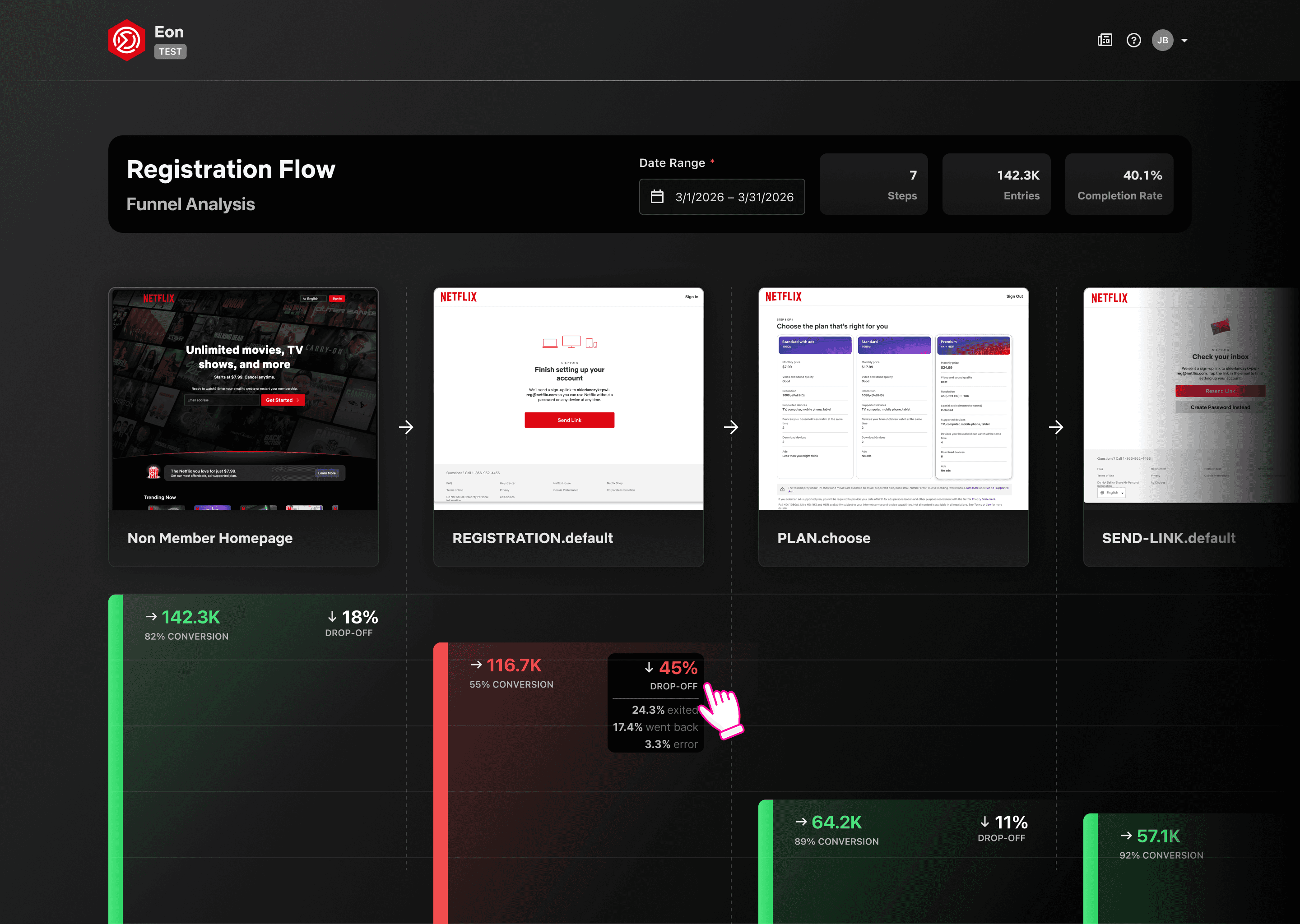
Before leaving Netflix, I designed four concept explorations as a north star for the team — showing how Eon could evolve from documentation to intelligence: flow health, dependency mapping, funnel analytics, and no-code copy editing.
Future State
Before leaving Netflix, I designed four concept explorations as a north star for the team — showing how Eon could evolve from documentation to intelligence: flow health, dependency mapping, funnel analytics, and no-code copy editing.
Future State
Before leaving Netflix, I designed four concept explorations as a north star for the team — showing how Eon could evolve from documentation to intelligence: flow health, dependency mapping, funnel analytics, and no-code copy editing.
Future State
Before leaving Netflix, I designed four concept explorations as a north star for the team — showing how Eon could evolve from documentation to intelligence: flow health, dependency mapping, funnel analytics, and no-code copy editing.
Impact
Generative Research

Screens Documented

Reduced Effort

Impact
Generative Research
Screens Documented
Reduced Effort
Impact
Generative Research
Screens Documented
Reduced Effort
Impact
Generative Research
Screens Documented
Reduced Effort
Copyright © 2025 Jesse Bones. All Rights Reserved.
All content, designs, and images on this website are the property of Jesse Bones and respective clients. Unauthorized use, reproduction, or distribution of any materials without explicit permission is prohibited.
Copyright © 2025 Jesse Bones. All Rights Reserved.
All content, designs, and images on this website are the property of Jesse Bones and respective clients. Unauthorized use, reproduction, or distribution of any materials without explicit permission is prohibited.
Copyright © 2025 Jesse Bones. All Rights Reserved.
All content, designs, and images on this website are the property of Jesse Bones and respective clients. Unauthorized use, reproduction, or distribution of any materials without explicit permission is prohibited.